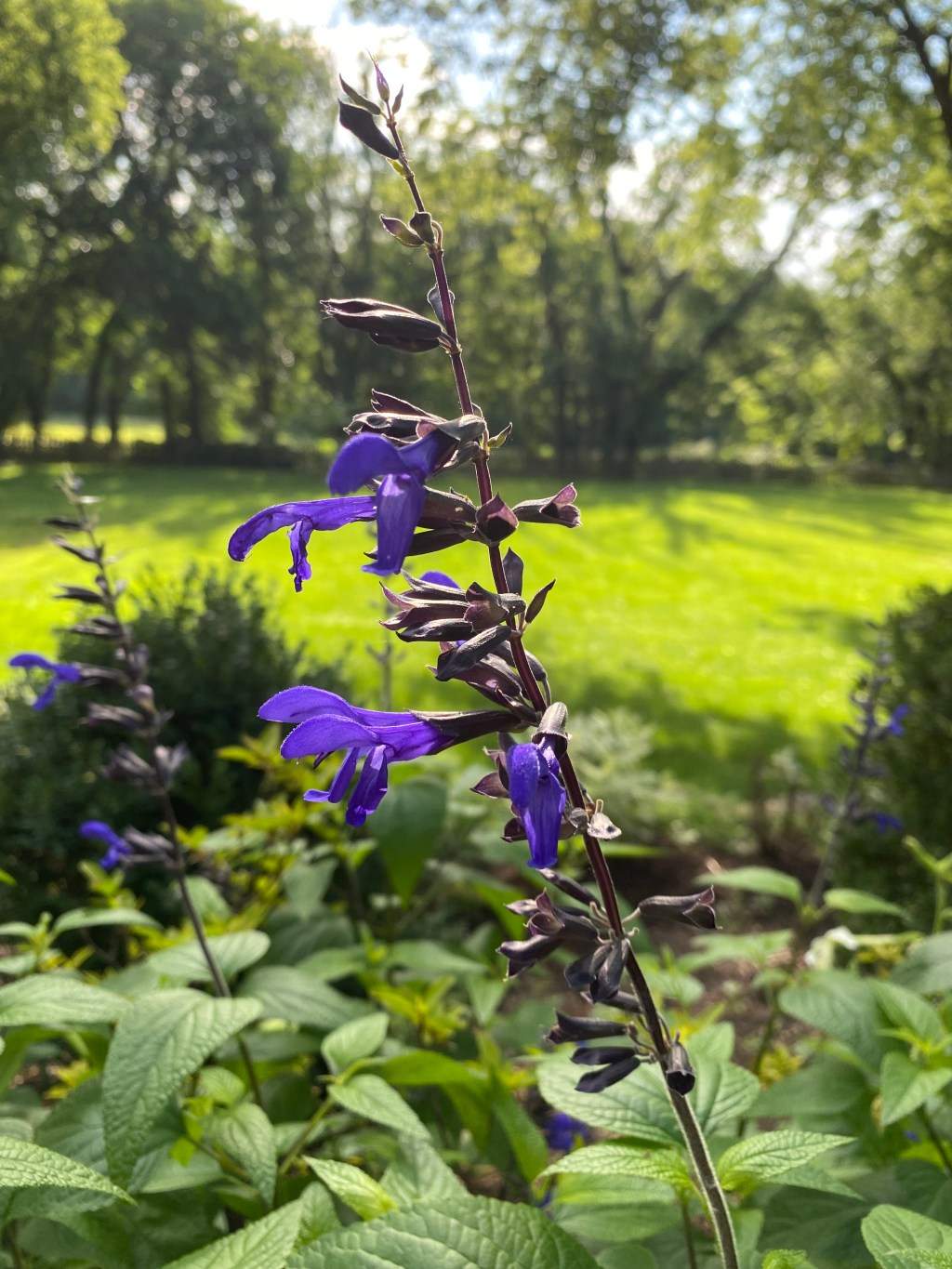
Flower breeders have been producing many marvelous garden salvias in recent years, but many will not reveal their potential because of a caterpillar that is spreading across the country. That caterpillar is the Southern Pink Moth, also known as Salvia budworm.
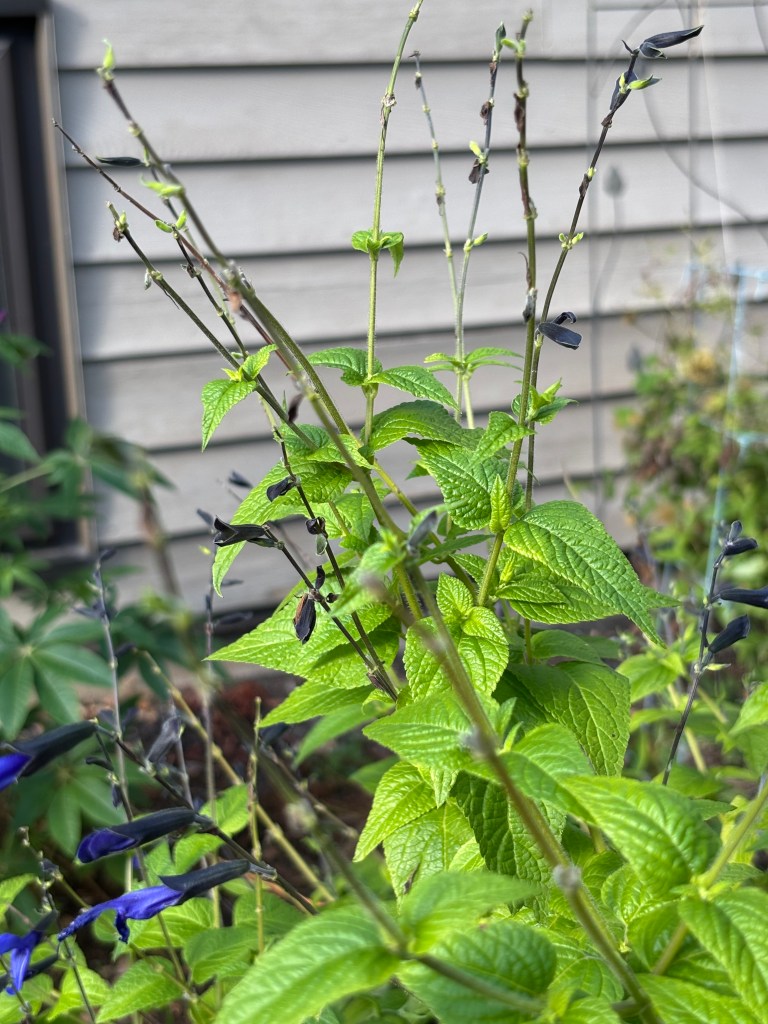
This beautiful, petite moth (Pyrausta inornatalis) lays its eggs on salvia plants. The larvae bore into and eat the buds of the flowers. The result is a plant with healthy foliage but bare stems sticking up where there should be flowers. Both adults and larvae are small and inconspicuous, so you might not know there is a problem until you realize your salvias never bloomed.
I’ve always been a salvia fan. As a commercial cut flower grower, my favorite was S. farinacea ‘Blue Bedder’. A more recent favorite is S. guaranitica ‘Black and Blue’. I’ve found both to be somewhat tolerant to partly shady conditions, and to be perennial in my Zone 6b garden. Even more important, Salvia seems impervious to rabbits. My garden has a healthy population of rabbits that will eat just about anything. But they have not yet bothered anything in the Salvia genus. Other garden writers have noted that Salvia appears to be distasteful to deer as well.
Also, pollinators LOVE Salvia, nearly covering the spikes in late summer. Oh, and hummingbirds are fans, too, dipping into the blue Salvia flowers as enthusiastically as they do the red ones.
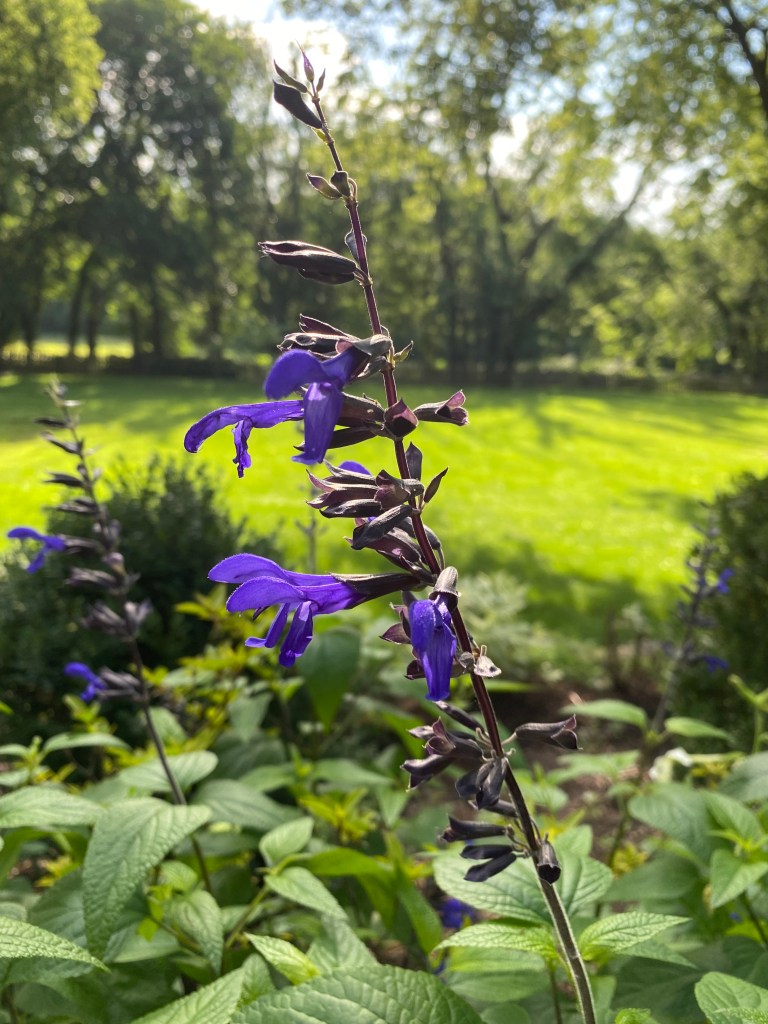
So an expanding menu of Salvia cultivars is a welcome development for my garden. Last spring I visited every garden center in town to see what was new in Salvias. I brought home ‘Lake Como’, a light blue flowered member of the Salgoon series, which is believed to be a hybrid of S. guaranitica and S. splendens. (The exact parentage is proprietary to the breeder and I’m just reporting a best guess that I read in Grower Talks, an industry magazine.) I also bought a lovely pink Salvia hybrid that was missing its tag. And I grew from seeds S. coccinea ‘Summer Jewel’ for my white garden. Not one of those plants bloomed all summer; nor did the ‘Black and Blue’ that I considered tried and true for many years. Finally, in late September, when the caterpillars seem to have finished their bud-gobbling work, and the moths are flying, the plants have managed to throw out a few blooms.
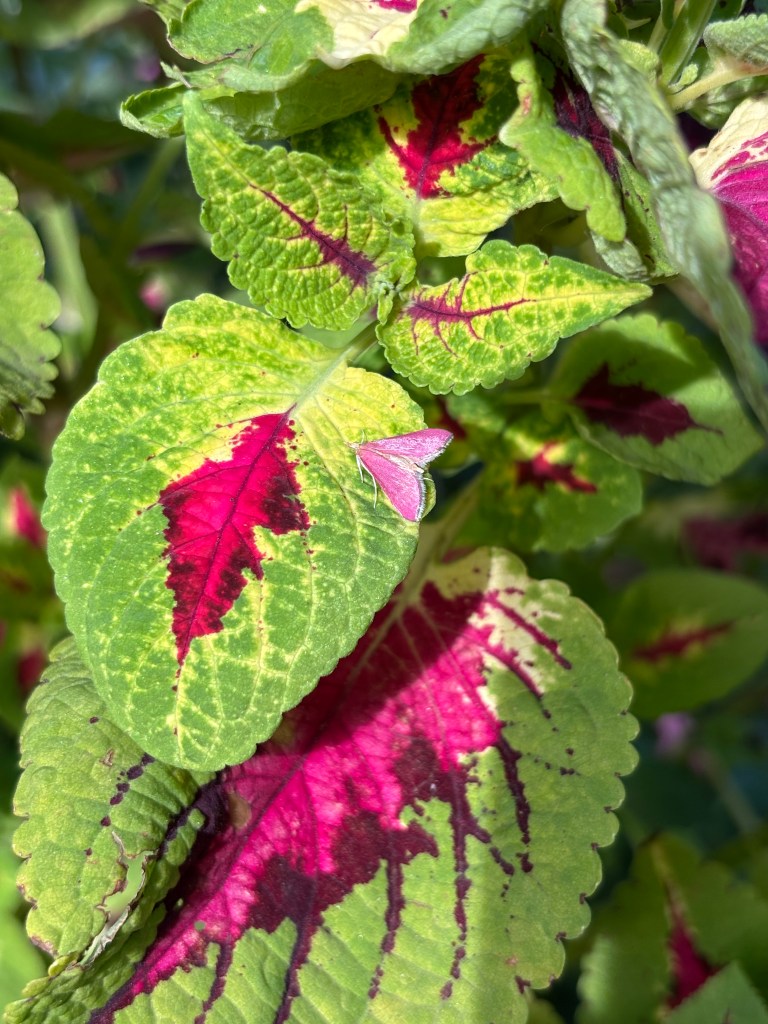
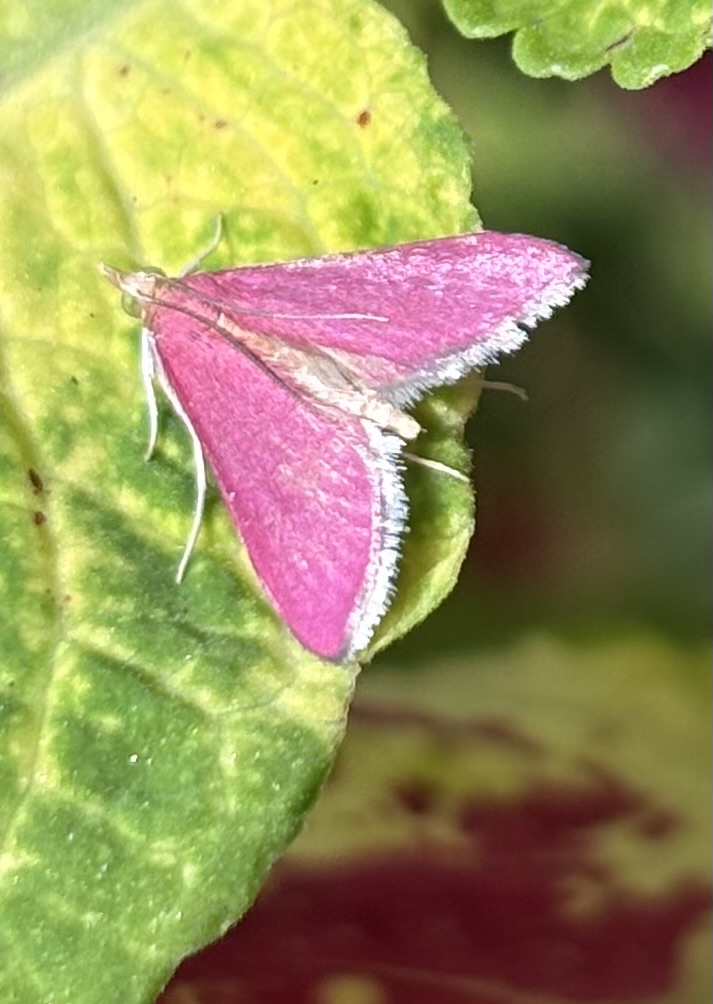
Southern pink moth has solid pink forewings and brown-gray hindwings. At rest on a plant, it is a pretty pink wedge about a half inch long. Disturbed, it flies off in an erratic pattern and disappears into a nearby plant. To get a good look at the adults, I approach quietly and just look until I spot the bright pink. I have yet to see the larvae on my plants. From others’ reports, it is a white caterpillar with black spots.
I’ve found surprisingly little information online about this insect, especially about its life cycle. The best article I have found is from Oregon State, where Salvia budworm was found in 2020, far from its native territory of the Southeastern U.S. https://blogs.oregonstate.edu/mgmetro/2020/09/01/southern-pink-moth-pyrausta-inornatalis/ I understand it is spreading across the U.S., and has been declared an invasive from the U.S. in Japan.
Here in Kansas, the state extension entomologist has received no reports of southern pink moth, except mine. And I have seen friends across town post photos of Salvia Black and Blue that were obviously budworm free.
The usual solution for budworms is to spray with Bt, but I am not going to do that because I grow these plants for pollinators including other butterflies and moths that would be equally harmed. Instead, I will pull out or cut back my salvias this fall to interrupt the life cycle, and hope that a cold winter will prevent their reappearance next year.


Leave a comment