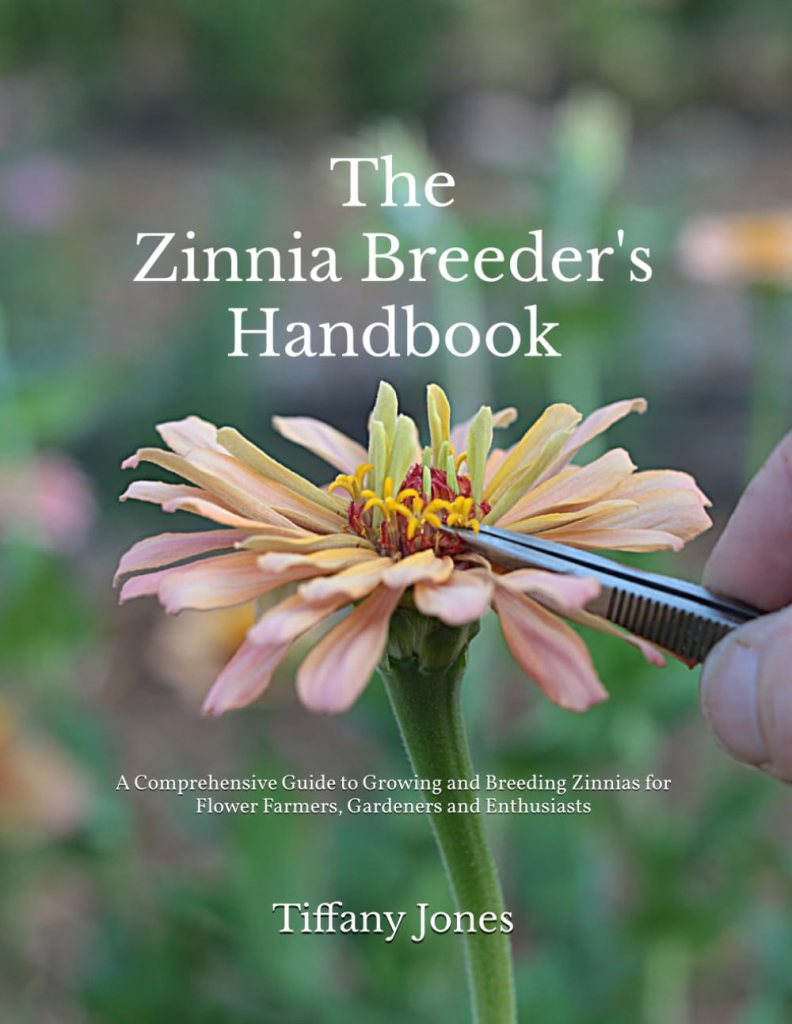
Tiffany Jones of Blomma Flower Farm did not plan to be a zinnia breeder, but one thing led to another and now she is producing and selling some of the prettiest new zinnias available. She has also become one of the most prominent educators in the grassroots zinnia breeding movement, through her frequent videos on Instagram and her book, The Zinnia Breeders Handbook.
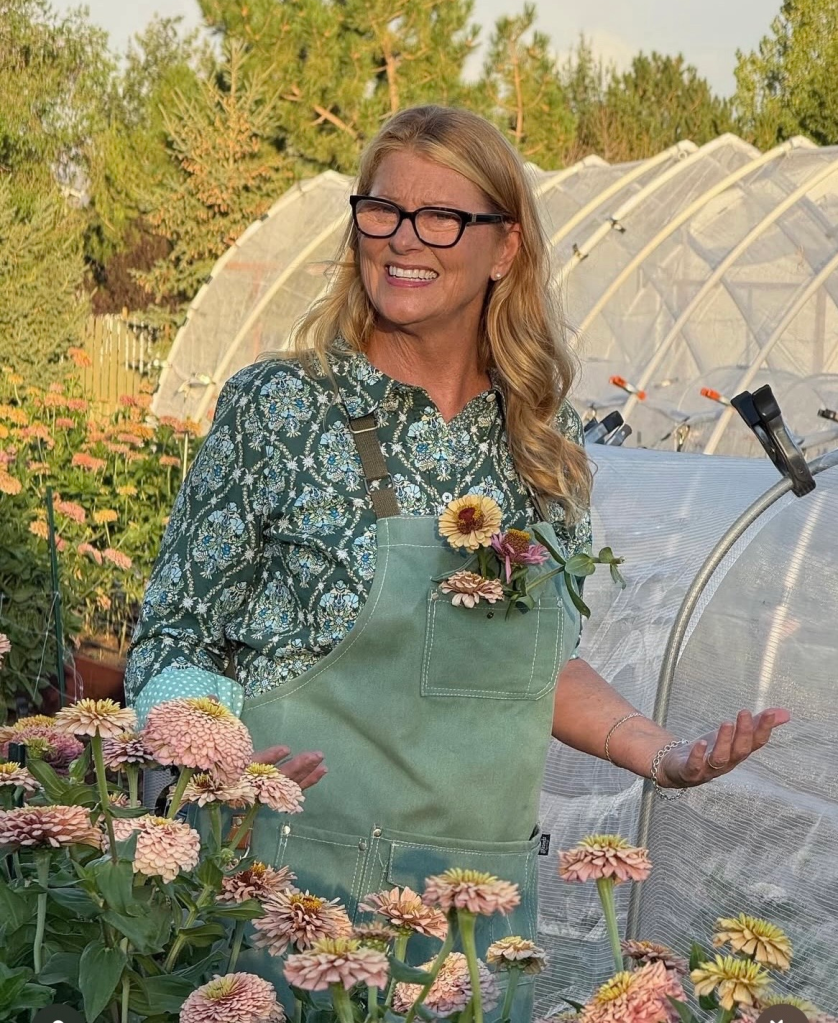
Tiffany was several years ahead of me in the zinnia learning journey, and I have been the beneficiary of her generous sharing of information. My own zinnia, Prairie Peach, probably would not be on the market today if I had not read her book and followed her on Instagram. Although I already felt I knew her from her social media, I was excited to have a personal conversation on the phone to write this profile. She is the real deal — knowledgeable, energetic, passionate about breeding, and so willing to help!
Tiffany started as a flower farmer in southern California. 2018 was her first season of selling to a wholesale market, and she noticed immediately that her pastel zinnias were snapped up by florists before she could get them out of the truck. It was not what she expected, having brought in gorgeous dahlias and other unusual flowers. “I need to pay attention to that,” Tiffany thought to herself.
She went home and looked at the zinnias that were in such demand, and decided to stop cutting them and instead save the seeds. The next year, when she grew those seeds, she got every color except the pastels from the previous year. Clearly, there was something going on with zinnia genetics that she didn’t understand. So she set out to learn.
“I went down the rabbit hole of information,” she recalled. She read thousands of entries on a zinnia breeding thread on Garden Web, searched out research papers from academics, and hunted down old books about plant breeding. At first, the result was hundreds of pages of notes, until she started organizing them logically.
“Eventually, just through reading, writing, and rewriting, thiings began to make sense,” she said. Family and friends looked at her huge notebook and encouraged her to publish it and make it available to the growing community of hobby zinnia breeders who were sharing information on social media. So she next set herself to learning the details of self publishing. In 2022, her book became available on Amazon.
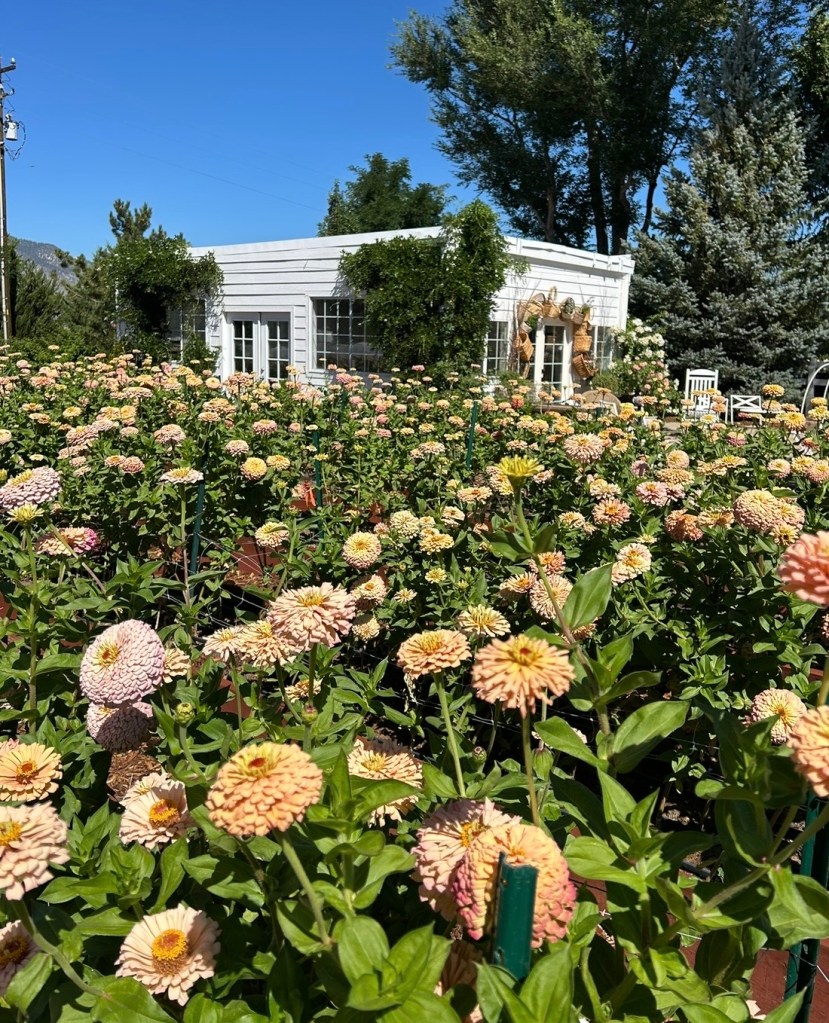
With a new understanding of how to isolate, cross pollinate, and save seeds, Tiffany started playing around with zinnias of various colors and forms. Before she got started on any particular breeding goal, she and her husband, Mike, sold their farm in California and moved to Gardnerville, Nevada, for Mike’s business. Their new farm has flat land, abundant groundwater, and a scenic mountain backdrop. The perfect place for both growing and photography!
As if to validate the move, her zinnia garden that first year produced an intriguing latte colored plant, one that was so unusual she immediately isolated it and saved seed.
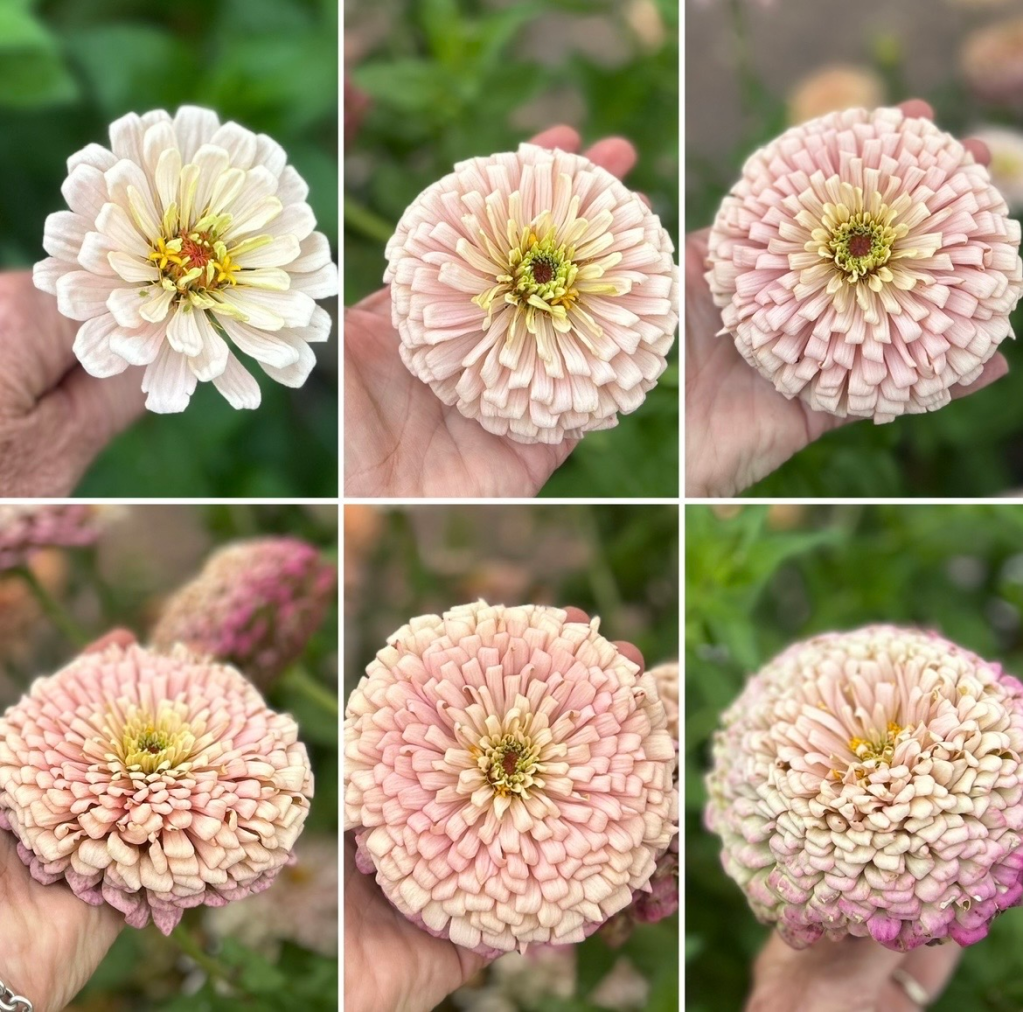
I asked Tiffany to tell the story of one of the varieties she is working on now, and she chose Pearl Pink, the progeny of that latte zinnia. In her own words:
“The seed from that plant grew into a remarkable bed of the most beautifully formed zinnia flowers I had ever seen. 3/4 of the bed was consistent in its form, 4” domed flowers heaped with tidy petals. They were vigorous growers and generous bloomers. About a quarter of those blooms were bright yellow, although beautifully formed, they were culled. About a third were just as beautifully formed but were a difficult color to describe – sort of a soft buttercream-chamois mix that I eventually called Tawny. Another third were beautiful shades of cool and warm pink and blush. The last little bit were mostly one-offs of random trait combinations, one of which was the very first spooned zinnia I grew and am continuing to work on. None of them were the color of the original latte parent, but the form was so remarkable, the plants were so healthy, the blooms were so full and so big I couldn’t shake them.
Even though I wasn’t going for pink of any kind, they were so exceptional, for the first time ever we took the risk and moved those plants to a new spot where we could isolate them separately. With the help of shade cloth and extra water for the first week, they made it to the end of the season and developed seeds.
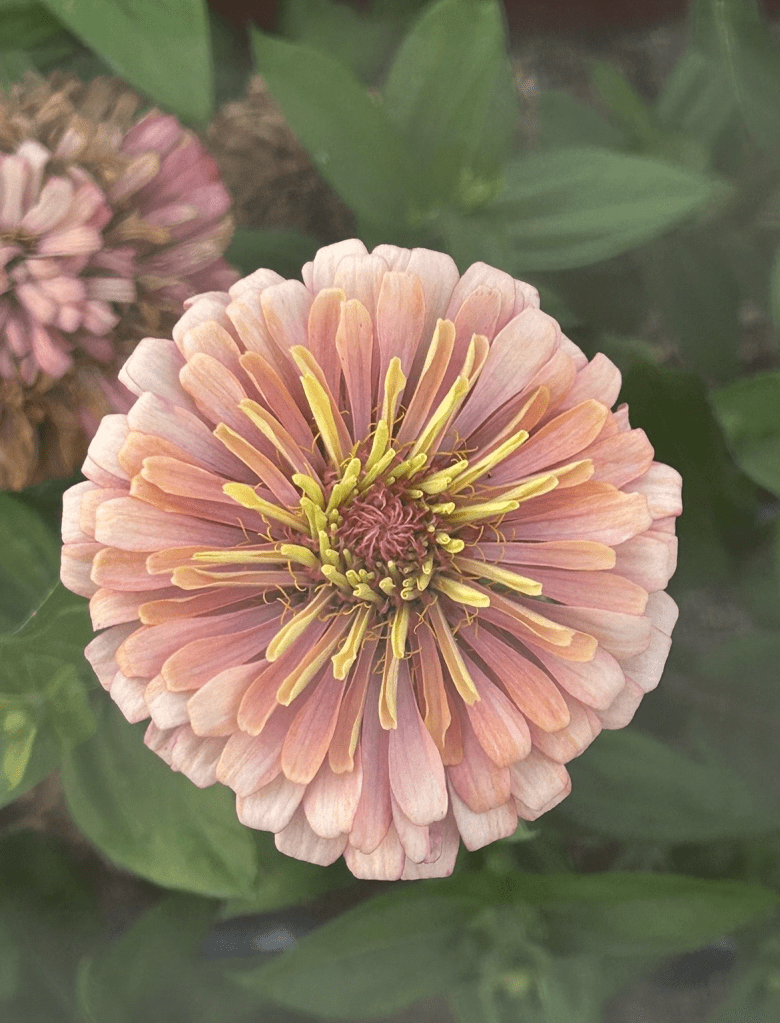
The following year I grew out two 40-foot rows of them. They were the most beautiful zinnias I had ever seen and I knew I had something really special. The flowers get very large,4 to 6 inches in diameter, and have what appears to be hundreds of petals. Even though they look like true doubles, they do produce disc flowers in small quantities so there is pollen for making new seed while allowing the blooms to look opulent and sumptuous. They are are a soft muted pink to soft blush mix, often starting out almost opalescent and shifting to the gentle shades once they have four or five rows of petals. To me, they are a grower’s dream.”
She always stresses the importance of having goals for a breeding line, whether it’s color, disease resistance, or some ohter characteristics. For her own work, she has defined her goals this way:
“I’m looking for an exceptional cut-and-come again bloom that looks luxurious enough to be a focal flower, captivates the buyer, can only be bought locally, and will fill a market bouquet with fewer flowers. There’s no digging or storing, they are quick to germinate, take plenty of heat, don’t need a lot of water and are exceptionally easy to grow.”
Pearl Pink ticks all those boxes, so Tiffany is growing her out this summer in the hope of having enough seed to sell in January 2027. Her sales last only a week or two, so if you want to buy her seed, you need to sign up for an email notification on her website. She also hosts a couple of on-farm workshops in summer for hands-on learning in the zinnia garden.
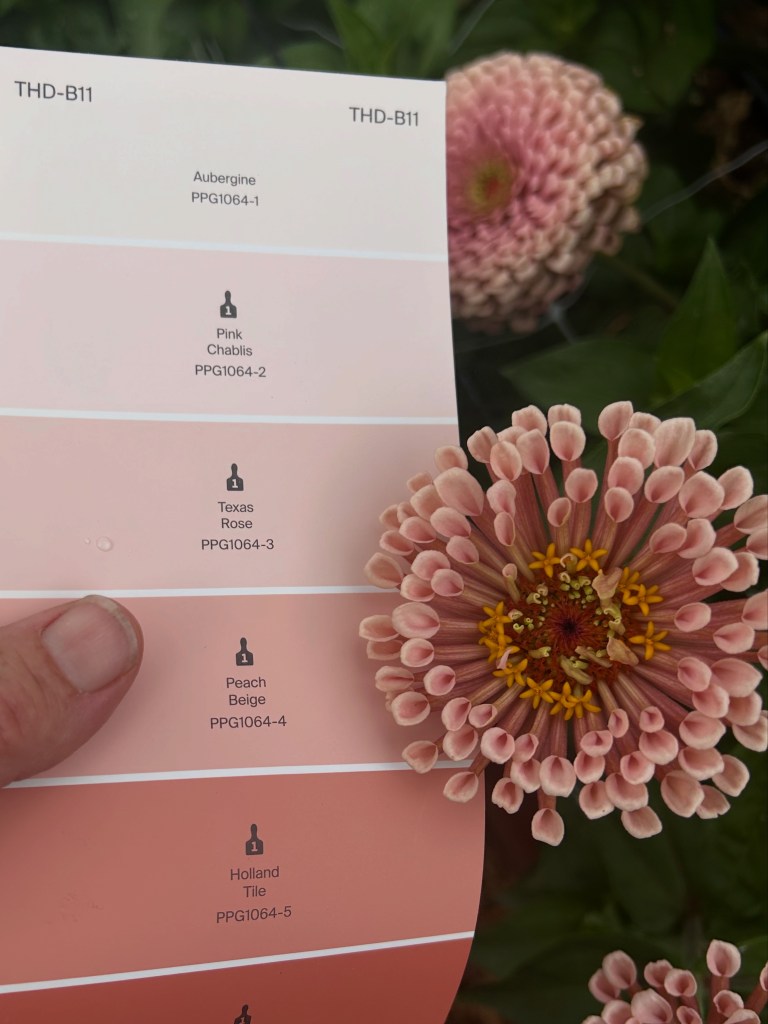
I can’t begin to report on everything else Tiffany has been doing in zinnia breeding. She has many varieties in the works, and she and Mike (an engineer) are constantly devising new systems and equipment. If zinnia breeding is in your future, Blomma Flower Farm is the place to learn.
Tiffany’s Instagram, web site, book sales.

 Flower Territory
Leave a comment