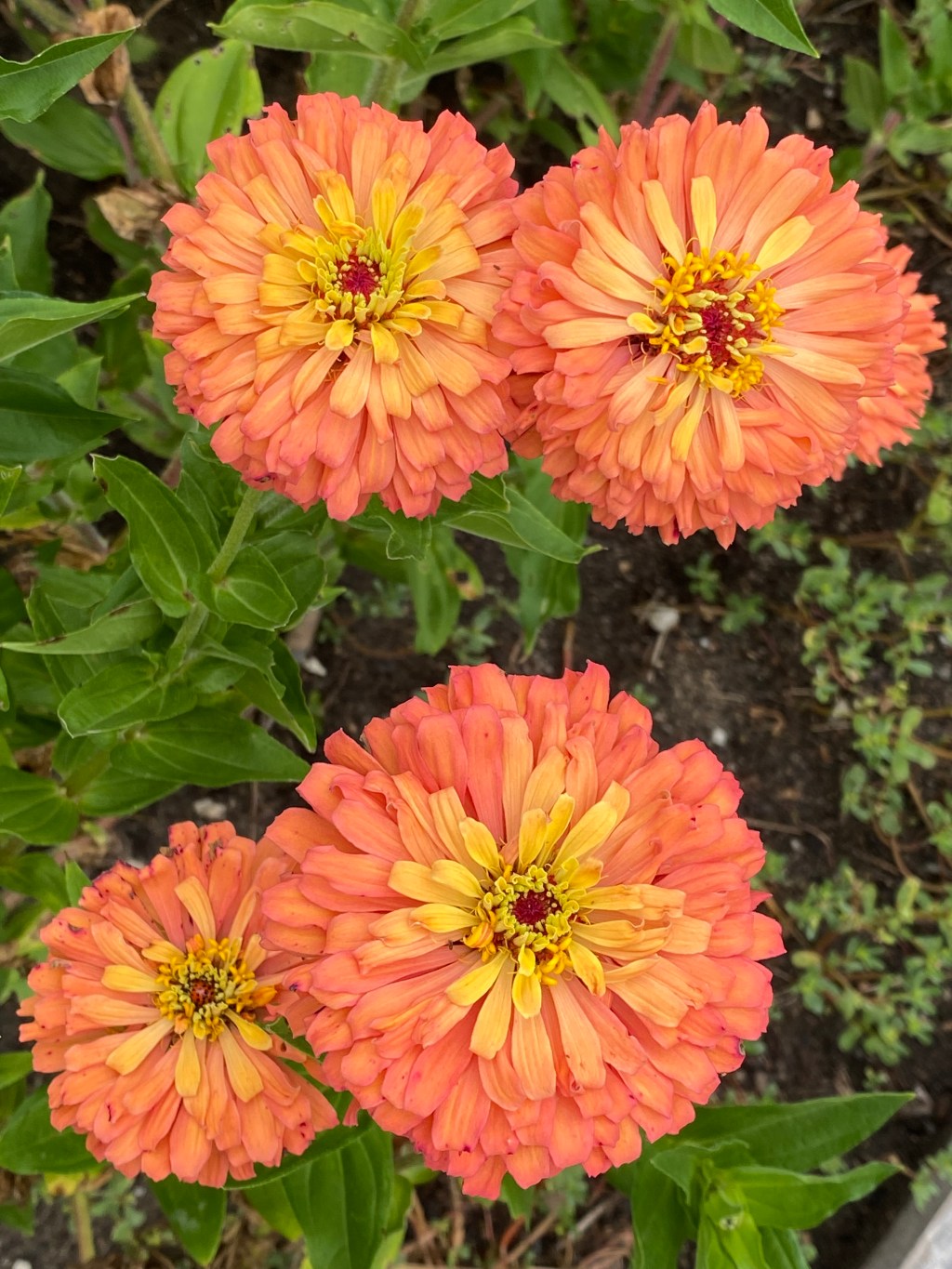
July 6, 2020, pandemic lockdown, returning from a walk around the empty streets, when I noticed an unusual flower in a patch of zinnias beside my driveway. Pink and yellow suffused the petals, like watercolors blending together into a charming peachy color. As a commercial cut flower grower, I have grown hundreds of thousands of zinnias in my career, so I knew instantly that this flower was unusual and special.
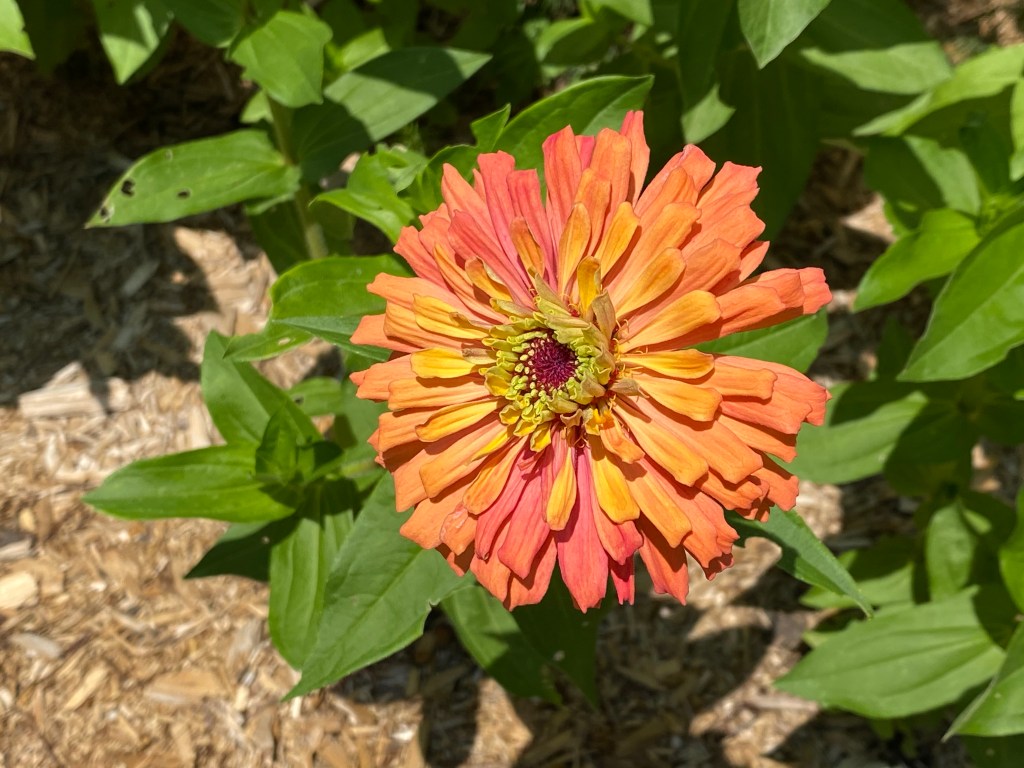
Luckily, I had enough plant breeding knowledge to realize that I needed to swing into action if I hoped to preserve this unique flower. The zinnia garden was, as usual, buzzing with pollinators. Saving that peachy color for next year meant I had to prevent the bees and butterflies from bringing pollen from other flowers to my lovely bloom. I rooted through my flower supplies for the organza bags commercial flower growers use to protect special blooms from insect damage. I took a few and tied them over the open bloom and several other unopened buds on the same plant. That quick action bought me a few days’ time to launch my career as a zinnia breeder.
At that time, there was little published information on zinnia breeding, and certainly no handbook to tell me what to do next with my flower. (There is now, though; see Resources for Zinnia Breeders.) In general, flower breeding information is hard to find. Unlike vegetable breeding, which has long been practiced and shared by backyard gardeners and seed savers, ornamental plant breeding is more secretive. Millions of dollars are spent every year on breeding programs at global horticulture companies because new varieties are big business. As gardeners, we crave the new and unusual — it’s what keeps gardening exciting on a personal level, and it’s what keeps the hort industry thriving.
The most important thing I found was a discussion board on Garden Web that had been running for many years, with thousands of posts by hobby zinnia breeders. It was a goldmine of information but there was no organization to it, so I went back a few years and dug in to learn as much as I could.
The first thing I learned was that zinnias cross-pollinate prolifically and widely. A safe isolation distance — the space required to prevent contamination by undesirable pollen — is believed to be a quarter mile. Most people don’t have that much space to isolate their breeding projects, so they have to cover rows of plants with tunnels, or bag individual flowers, as I had just done, and then hand pollinate with an small paint brush every day for several weeks.
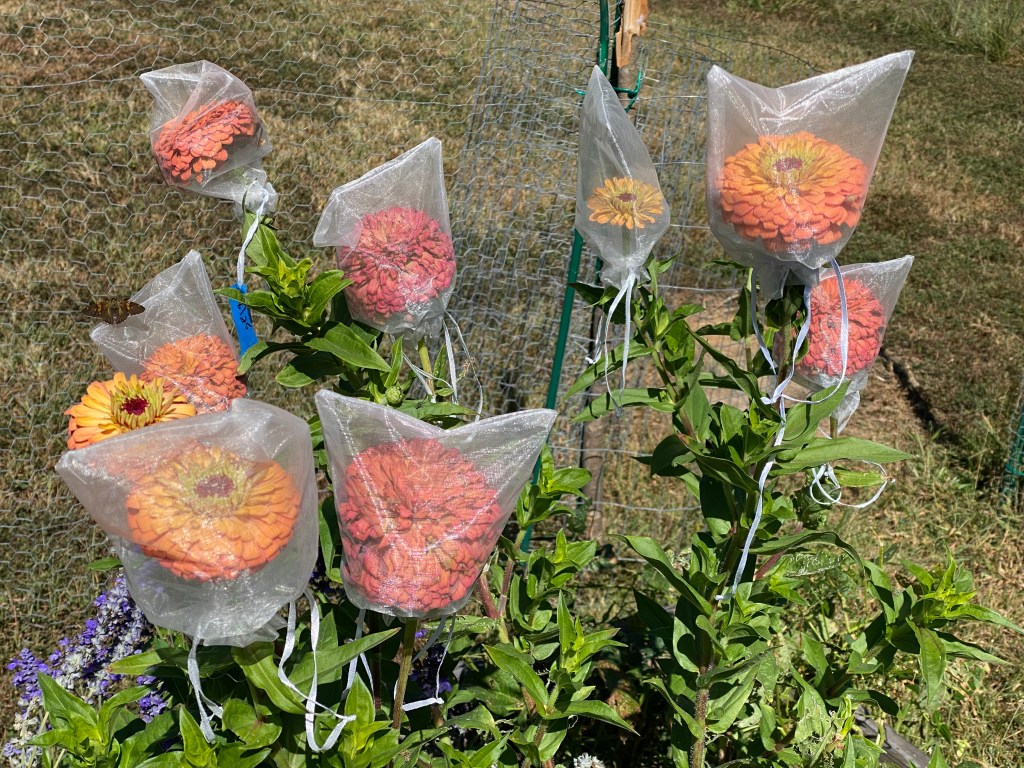
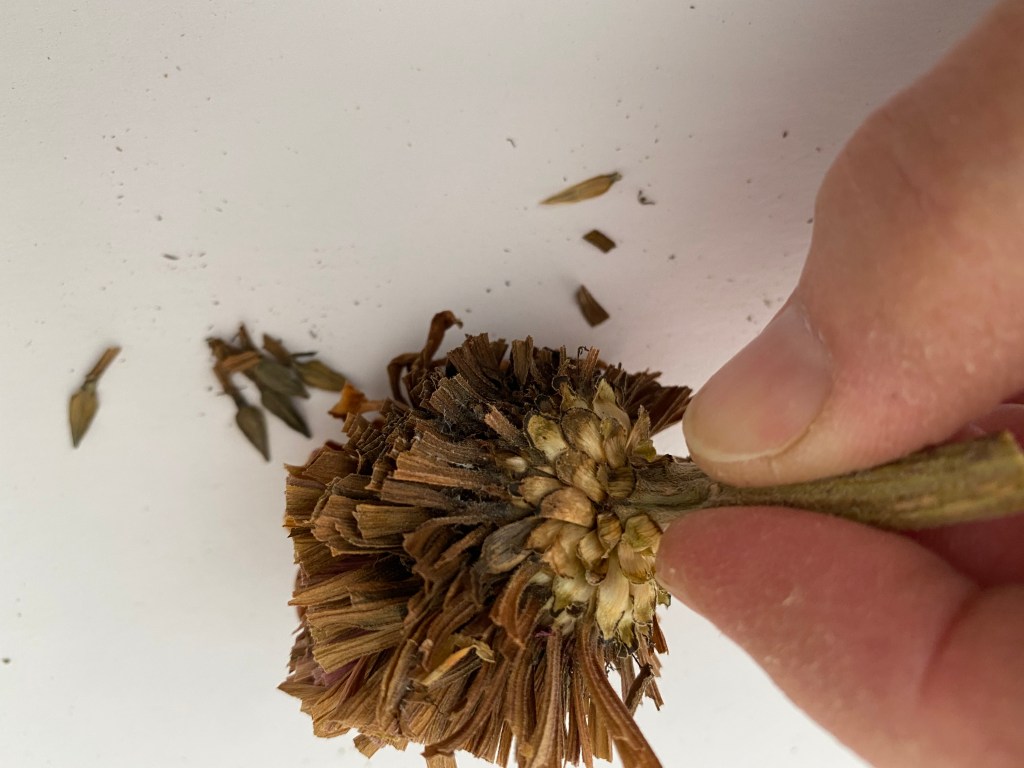
I kept the blooms on that plant covered all summer, and brought them inside when they had dried. I extracted the seeds and saved them to grow the next year.
Perhaps it was a coincidence that one week before the zinnia bloomed in my garden in town we had signed a contract to buy a small piece of land about 20 miles out in the country. Five acres on a bluff overlooking a river, our patch is surrounded completely by oak forest. It has an off-grid cottage in a style reminiscent of a Hobbit House. We took possession in August and started to build a garden in the little clearing around the cottage. I’ll call it Riverdell.
The second year, I planted my saved seeds at Riverdell. Only five were peach, so I covered those blooms and hand pollinated them, making various combinations of crosses. For example, I crossed #1 with #5, then #3 with #5, and so on. Again I saved the seeds of those in bags.
The following year, 2022, I got 12 plants in my peach color theme, all the result of my deliberate crosses the previous summer. I again covered, hand pollinated, and saved seeds.
In 2023, nearly all of my saved seed produced peach and yellow flowers. I named her Prairie Peach in honor of our native landscape here in Kansas.
In 2024, 98% of my 100 plants were peach and yellow.
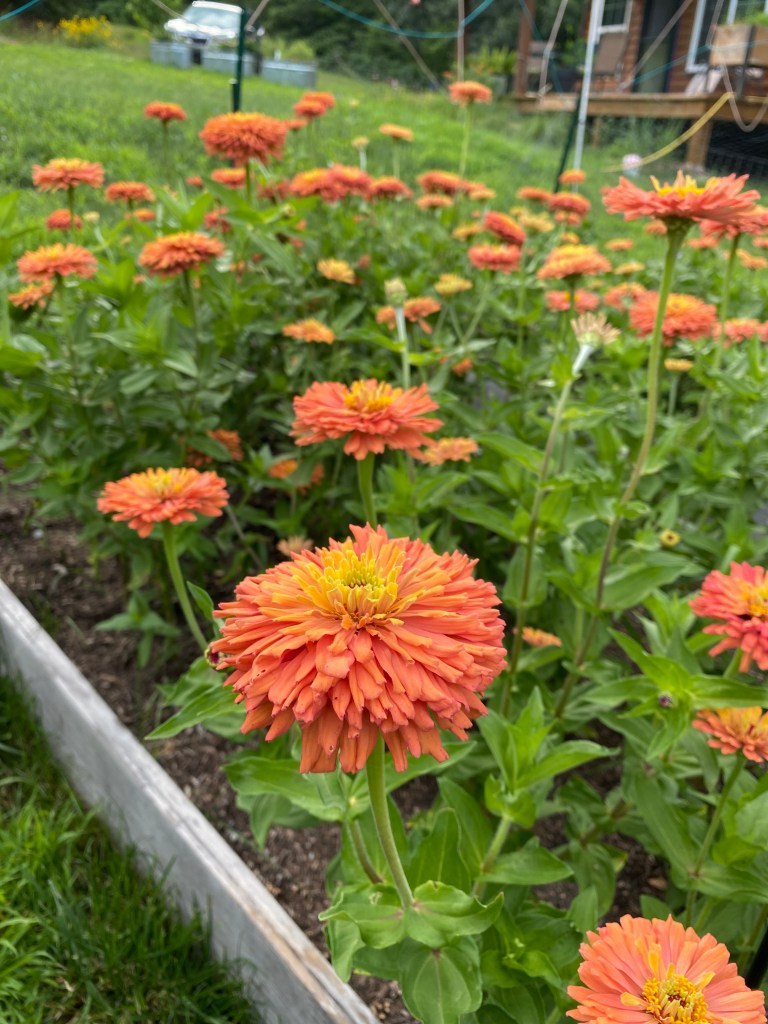
At that point, several people I respect encouraged me to bring the variety to market because it appeared to be stable. I had some trepidation — what if some foreign pollen had been accidentally brought to Riverdell? I drove the surrounding streets, looking for zinnias in gardens but didn’t see any within a quarter mile. A Google map shows dense forest in every direction around the garden. The likelihood of accidental pollination seemed small, so I decided to go for it.
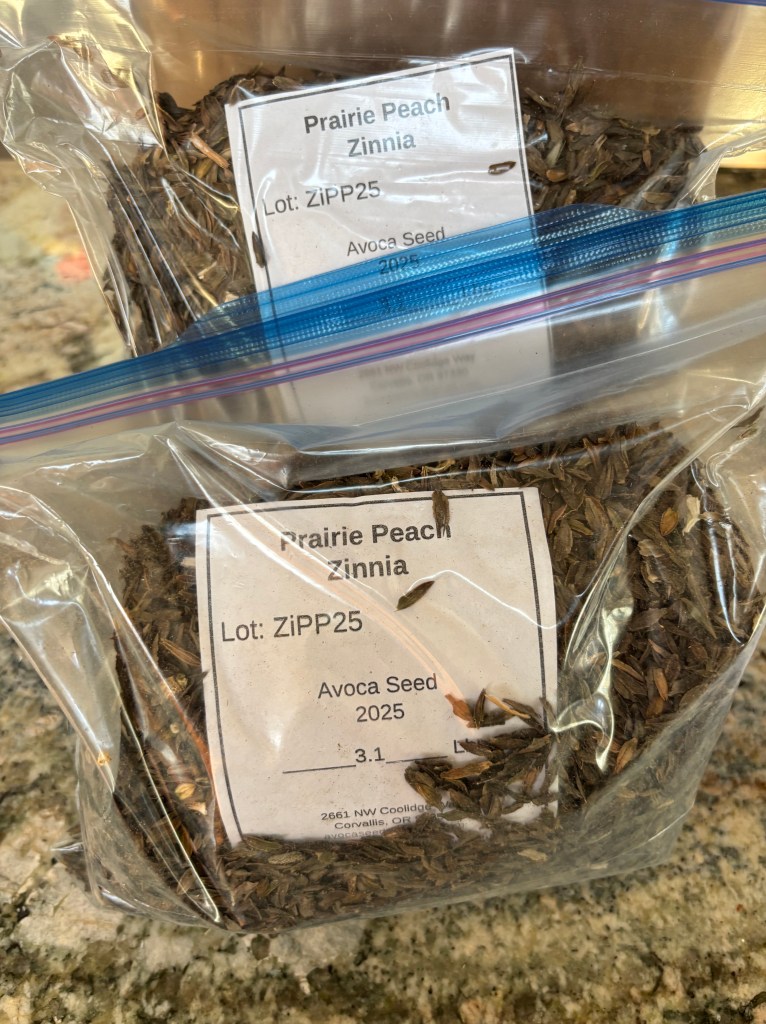
I don’t have enough land to grow any significant amount of seeds myself, so I outsourced it to a seed farm in Oregon. From just 200 plants, I got 3 pounds of seed. So in 2026, I have seed to sell.
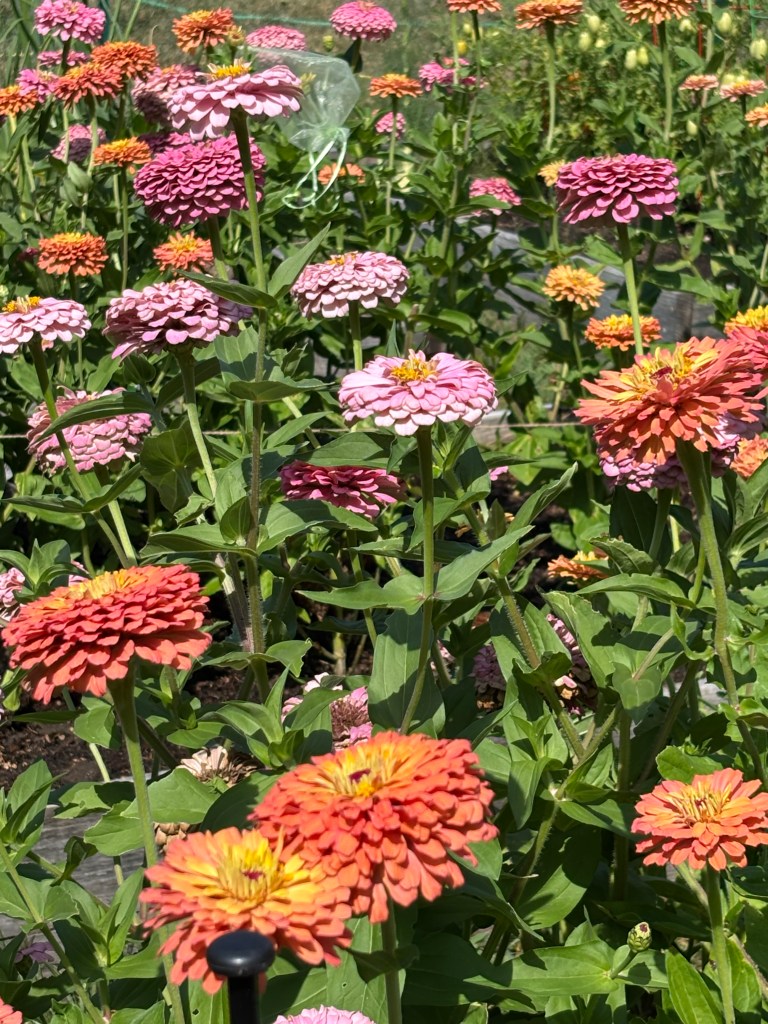
With Prairie Peach off in Oregon, I realized I didn’t have to keep growing it myself. After five years, I was ready to grow some other colors. But I really like the glowing yellow center petals of Prairie Peach so I set my sights on developing a companion that I would call Prairie Rose, a mid pink with the same glowing yellow center. Taking advantage of Riverdell’s natural isolation, I planted Prairie Peach side by side with a pink zinnia and I let the bees do the work of cross pollinating them.
Having Riverdell has been an incredible boost for my breeding efforts. Because of its isolation, I can focus on a very specific goal and be relatively certain that my plants are safe from pollination by other zinnias.
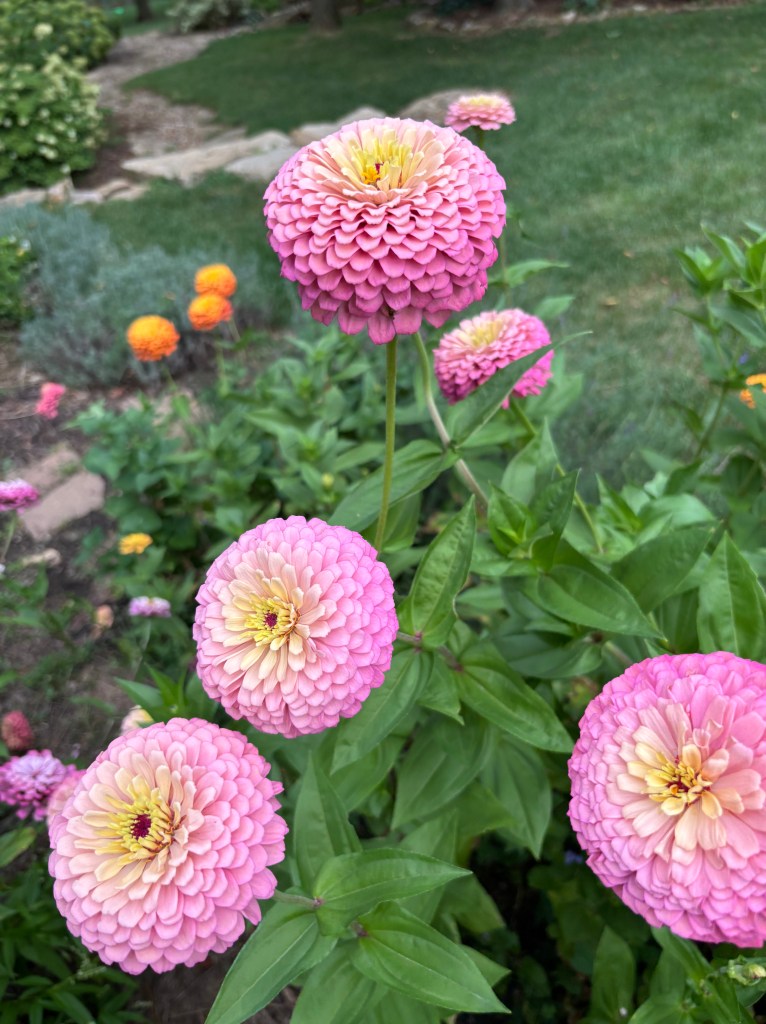
This story of Prairie Peach is only half of my breeding efforts. I have also been growing and crossing zinnias at my home. That breeding is more far-ranging in terms of crossing various zinnia varieties. But because it’s in town, where neighbors do grow zinnias, I have to bag and hand pollinate every flower I want to save. To my surprise, in 2025 I had several plants at home that are almost what I want in Prairie Rose.
As I write this, it’s winter and I have many hours of seed cleaning ahead of me. I don’t mind the work, though, as it keeps my thoughts focused on spring and whatever surprises await in the zinnia gardens.
Prairie Peach Zinnia seeds are available in 50-seed packets from growitalian.com.

 Flower Territory
Leave a comment